Chromium picolinate: how to choose it and how to take it
Why trivalent chromium, which forms exist, what “100 µg of chromium” on the label means and what the certificate of analysis should confirm.
October 11, 2026

Chromium is a trace element of which we need only a few micrograms a day. That is exactly why, with chromium, quality shows in the details of the label. Here is what to look for, and why.
How to choose
- Trivalent chromium — the form found in food.
- A stable, well-studied form — for example chromium picolinate.
- The amount in µg of elemental chromium and the % NRV, not just the weight of the compound.
- A dose at which the authorised claims apply — 100 µg gives 250% NRV.
- A certificate of analysis for the batch, confirming the chromium and its purity.
Why? Read on.
Why trivalent chromium
In food, chromium occurs as trivalent chromium, Cr(III). It is found in meat, wholegrain foods, fruit, vegetables, nuts, spices and brewer's yeast. Exactly how much a food contains depends on the soil, the water and the processing, so the content varies widely.
Supplements use the same trivalent form, and the health claims authorised in the EU refer explicitly to foods that are a source of trivalent chromium.
The forms of chromium
In supplements, chromium is bound to different molecules: chloride, nicotinate, polynicotinate, picolinate. Chloride is a simple inorganic salt. Nicotinate and polynicotinate are complexes with nicotinic acid, known as a form of vitamin B3.
Picolinate is a complex of chromium with picolinic acid, a natural derivative of the amino acid tryptophan. Three molecules of picolinic acid wrap around one chromium atom to form a stable, reddish compound. The method for making it was patented by the US Department of Agriculture, and its safety as a source of chromium in foods and supplements has been assessed in detail by the European Food Safety Authority (EFSA).
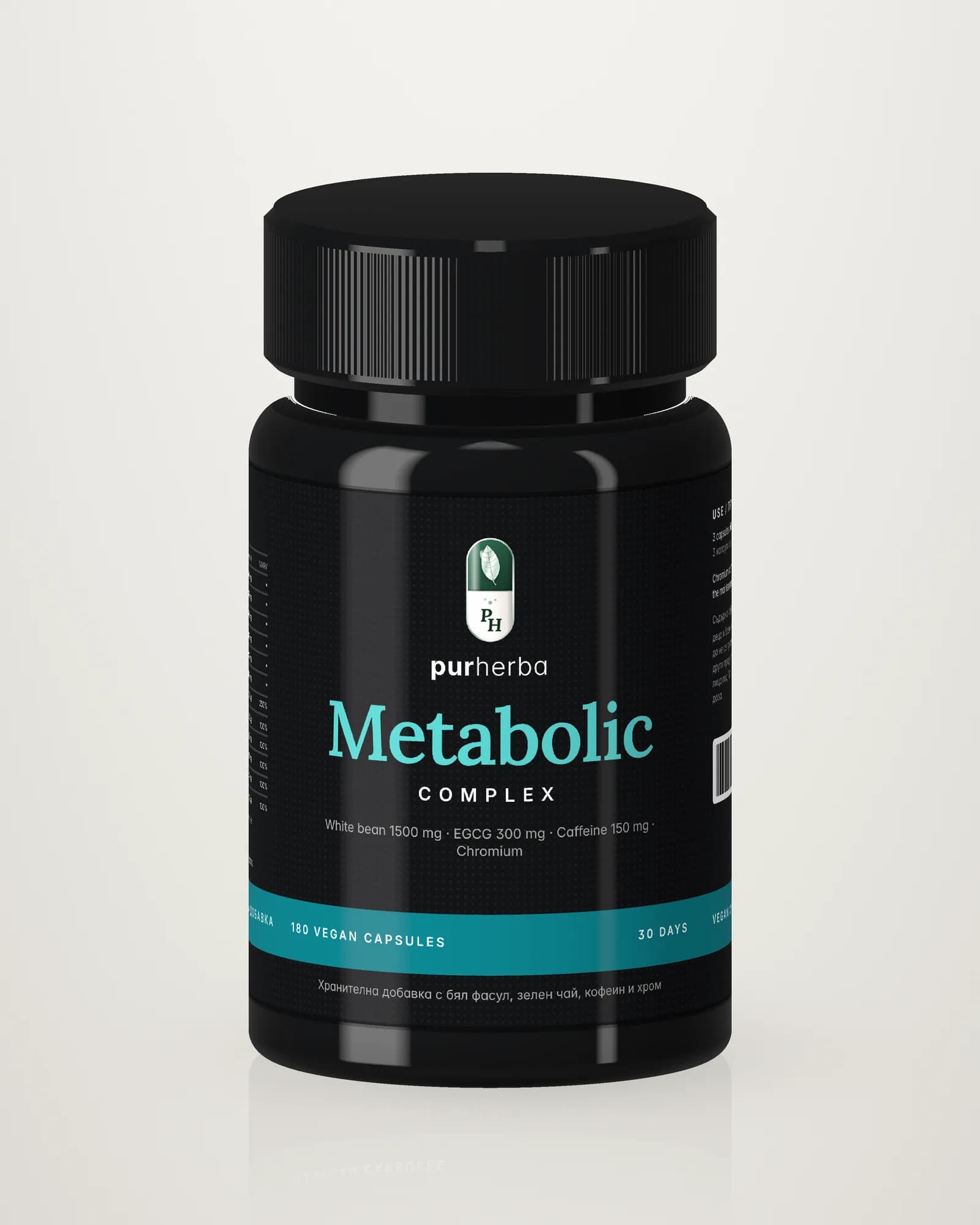
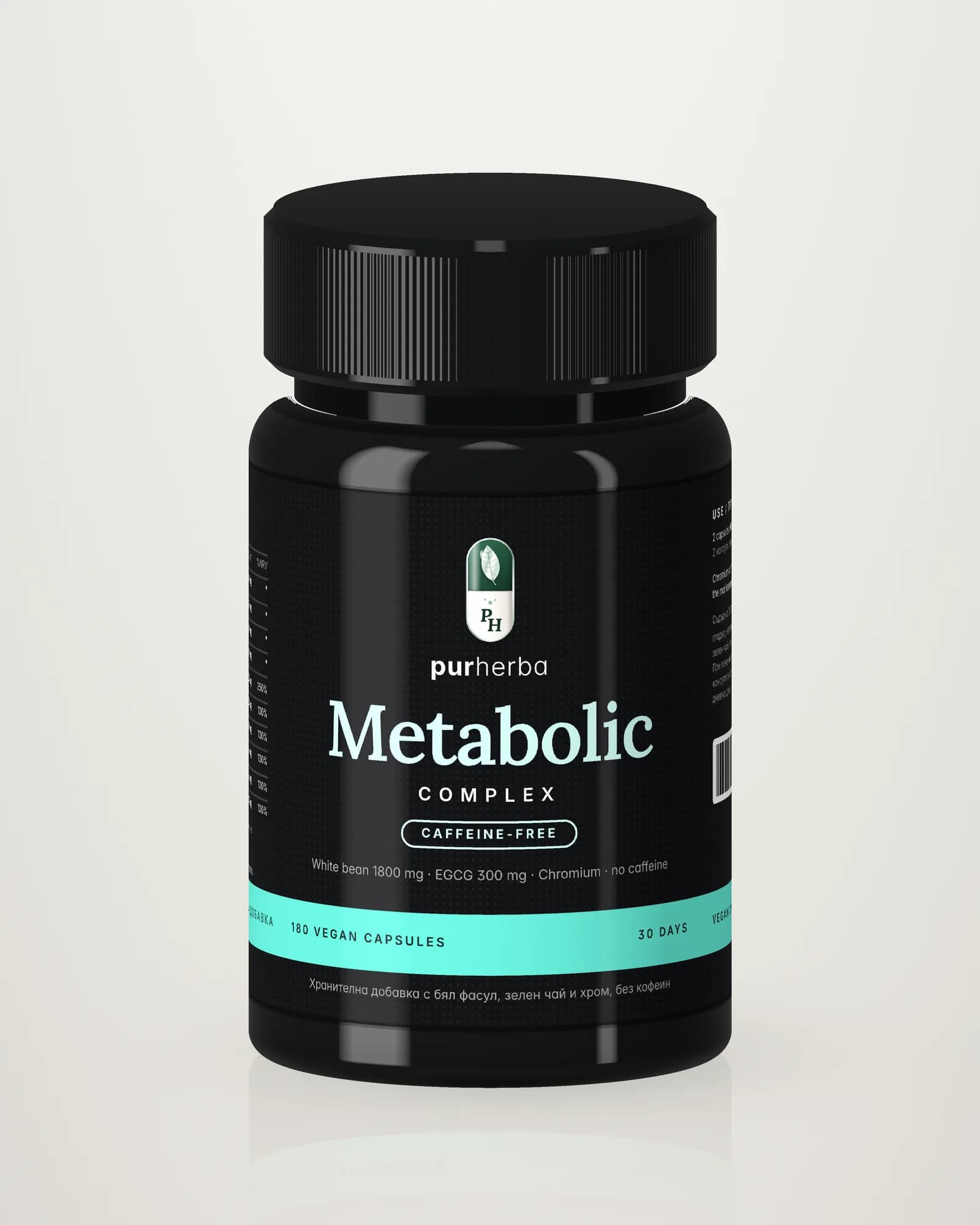
Found in:Metabolic ComplexMetabolic Complex Caffeine-Free
What “100 µg of chromium” means
Chromium makes up about 12.4% of the weight of chromium picolinate — the rest is picolinic acid. So 100 µg of chromium is contained in about 0.8 mg of chromium picolinate. A good label states the amount of elemental chromium — that is what is compared with the nutrient reference value (NRV), and that is what matters when comparing products.
Why 100 µg
The authorised claims for chromium apply to foods that are a source of trivalent chromium — that is, they provide at least 15% of the NRV per day. 100 µg gives 250% NRV: comfortably above that threshold and at the same time a moderate amount, within the range found in most multivitamins (typically 35–120 µg).
The certificate of analysis
When the dose is measured in micrograms, precision is everything. The certificate of analysis should confirm the chromium content, its trivalent form and the levels of heavy metals — lead, cadmium, mercury, arsenic — as well as microbiological purity.
The certificate of analysis for each of our batches is on the product page and behind the QR code on the packaging.
What chromium does
According to the health claims authorised in the EU (Regulation (EU) No 432/2012):
- Chromium contributes to normal macronutrient metabolism.
- Chromium contributes to the maintenance of normal blood glucose levels.
The history: the “glucose tolerance factor”
In 1955, Walter Mertz and Klaus Schwarz fed laboratory rats a diet based on torula yeast and noticed that it lacked something the animals needed to process sugar normally. They called the unknown substance the “glucose tolerance factor” (GTF). In 1959 the two published that the key to it was trivalent chromium — and so chromium entered the science of nutrition. The abbreviation “GTF chromium” can still be found on labels today.
Chromium in Metabolic Complex
Both Metabolic Complex and Metabolic Complex caffeine-free contain 100 µg of chromium per daily dose, in the form of chromium picolinate (250% NRV). In the formula it is combined with iodine, zinc, niacin, vitamins B6 and B12 and plant extracts of white kidney bean and green tea. The capsules are transparent, vegan (HPMC), size 0.
How to take it
- Metabolic Complex: 3 capsules with breakfast and 3 with lunch, not in the evening. Contains caffeine (150 mg a day) — not recommended for children and pregnant women.
- Metabolic Complex caffeine-free: 2 capsules with each of the three meals.
Both products contain 300 mg of EGCG a day — do not take them on an empty stomach or on the same day as other green tea products. Not suitable for pregnant or breastfeeding women or for anyone under 18.
Sources
- 1.Регламент (ЕС) № 432/2012 на Комисията (консолидиран текст към 17.05.2021) — списък на разрешените здравни претенции, вписвания за хром
- 2.NIH Office of Dietary Supplements. Chromium — Fact Sheet for Health Professionals
- 3.Vincent JB (2013). Chromium and Glucose Tolerance Factor. In: Kretsinger RH, Uversky VN, Permyakov EA (eds). Encyclopedia of Metalloproteins. Springer, pp. 603–607
- 4.EFSA Panel on Food Additives and Nutrient Sources added to Food (ANS) (2010). Scientific Opinion on the safety of chromium picolinate as a source of chromium added for nutritional purposes to foodstuff for particular nutritional uses and to foods intended for the general population. EFSA Journal 8(12):1883
- 5.Technical Resources International / National Toxicology Program (1998). Summary of Data for Chemical Selection: Chromium Picolinate (CAS 14639-25-9)
- 6.Photo: “Chromium crystals and 1cm3 cube.jpg”, Alchemist-hp, FAL, Wikimedia Commons