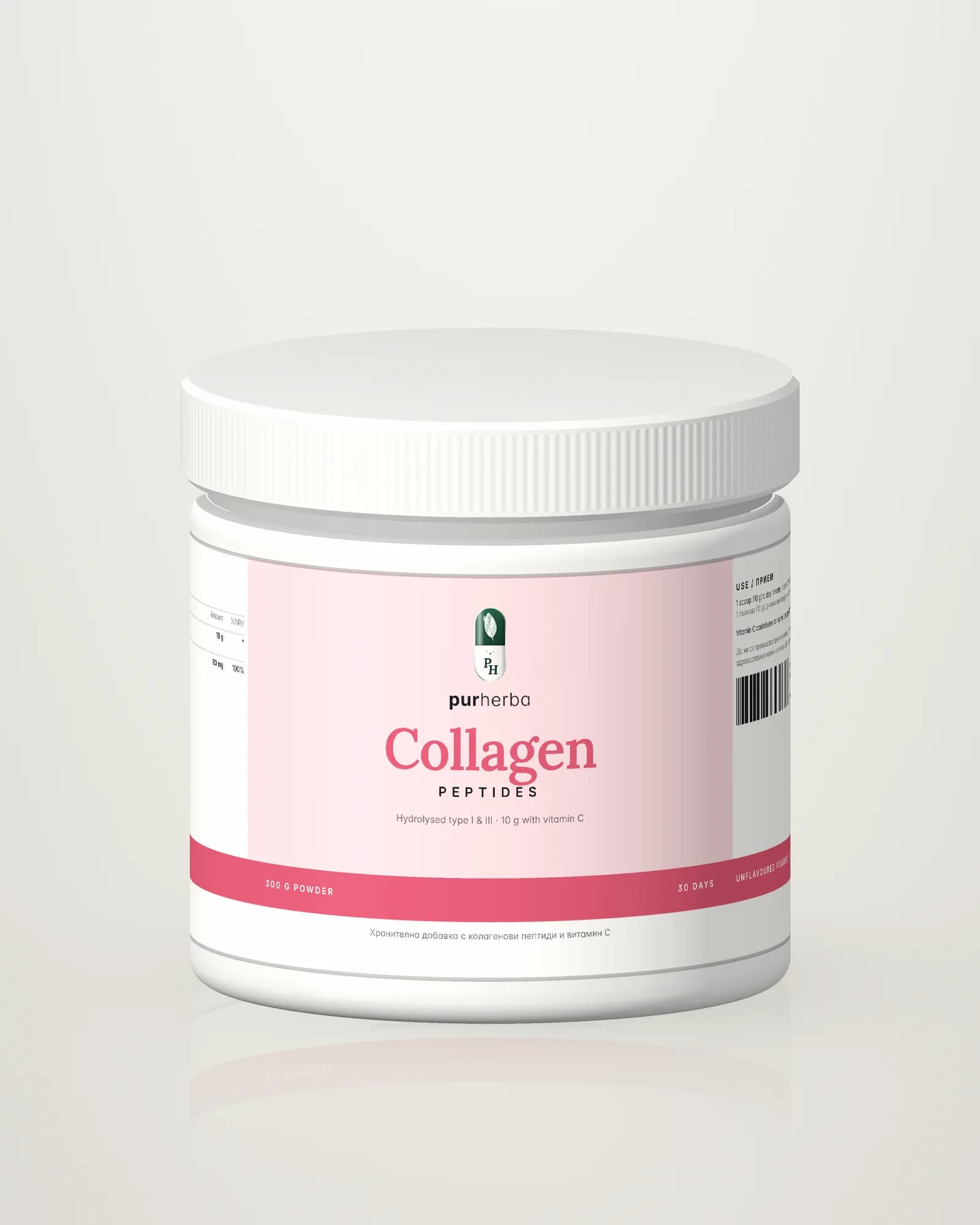
Collagen peptides: how to choose a collagen powder
Hydrolysed collagen, types I and III, 10 g a day and vitamin C: what each of them means, how to compare products and how to take collagen every day.
October 11, 2026

Collagen is the most abundant protein in the body and one of today’s most popular supplements. Products, however, differ in form, source and dose. Here is how to choose, and why.
How to choose
- Hydrolysed collagen (collagen peptides): it dissolves easily and has a neutral taste.
- A stated source and type, for example bovine, types I and III.
- A daily dose of around 10 g, which is one scoop.
- With vitamin C, which contributes to normal collagen formation.
- A clean formula: no sugar or flavourings, with a certificate of analysis for the batch.
Why these five? Read on.
Why hydrolysed
Native collagen is a long molecule of three intertwined chains, so large that it does not dissolve in cold water. In hydrolysis, enzymes break it into short peptides. The powder then dissolves completely in water, coffee, juice or yoghurt, with no taste and no lumps.
The peptides keep collagen’s amino acid profile: about a third of them is glycine, and proline and hydroxyproline, amino acids that are hardly found in other proteins, are its “signature”.
Found in:Collagen Peptides 10 g
Types I and III: what they mean
The body has around 28 types of collagen. Type I is the most abundant, found in the skin, tendons and bones; type III accompanies it in the skin and blood vessels. Bovine collagen naturally contains both types, which is why the label says “types I and III”.
Marine collagen (from fish) is mostly type I. Both sources give collagen peptides; the difference lies in origin and price.
Why 10 g
Studies with collagen peptides most often use between 2.5 and 10 g a day. 10 g, one scoop, is the upper end of that range and a convenient daily dose. Capsules rarely get there: 10 g of collagen is 20 capsules, which is why collagen is taken as a powder.
Why vitamin C
The body cannot build collagen without vitamin C: the enzymes that “stitch” the collagen chains together need it. That is why the EU-authorised claim is for vitamin C: vitamin C contributes to normal collagen formation for the normal function of blood vessels, bones, cartilage, gums, skin and teeth.
One serving contains 80 mg of vitamin C, 100% of the NRV.
Why the certificate matters
Collagen is an animal product, so a good manufacturer states the country of origin of the raw material and shows an analysis of every batch: protein, heavy metals and microbiology. The certificate for each of our batches is on the product page and behind the QR code on the product.
Where the word comes from
“Collagen” comes from the Greek kolla, “glue”, and means “that which produces glue”. The name is literal: for centuries animal glue was boiled from skin and bones, and the gelatine we know from the kitchen is partly broken-down collagen. Collagen peptides are the next step: collagen broken down far enough to dissolve in any drink.
How to take it
- 1 scoop (10 g) a day, stirred into water, juice, coffee or yoghurt.
- At any time of day; regularity is what matters.
- One 300 g pack lasts 30 days.