Natural caffeine: how to choose it and how to take it
What "natural caffeine from green coffee" means, how its origin is verified, how much caffeine there is in a cup of coffee or tea and how to plan your daily intake.
October 11, 2026

Caffeine is the most familiar substance in our daily lives: we drink it every morning in coffee and tea. In supplements, however, it comes from two very different sources. Here is how to choose, and why.
How to choose
- Natural caffeine: extracted from a plant, most often from green coffee beans.
- A stated source on the label: "from green coffee", not just "caffeine".
- A clear dose in milligrams, so you can add it up with your coffee and tea.
- A moderate amount, so there is still room in the day for your favourite cup of coffee.
- A certificate of analysis for every batch.
Why? Read on.
Natural and synthetic caffeine
The molecule is the same, C8H10N4O2. The difference is in the origin. Natural caffeine is extracted from green, unroasted coffee beans by the same methods used to make decaffeinated coffee: with water, or with carbon dioxide under a pressure 250–300 times higher than atmospheric. Synthetic caffeine is made in a chemical plant from petroleum-based starting materials.
So choosing natural caffeine is choosing a raw material, the same one that the coffee in your cup comes from.
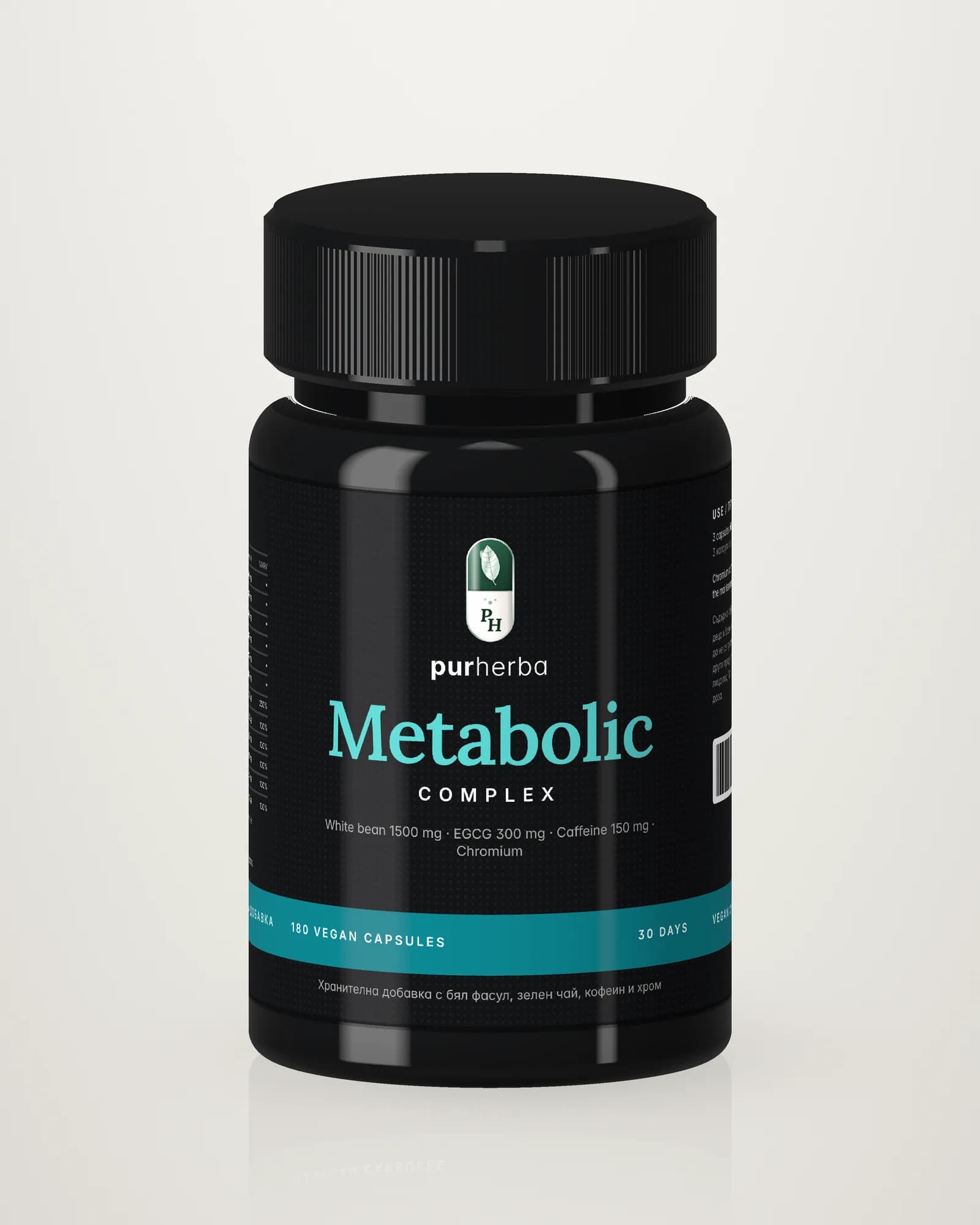
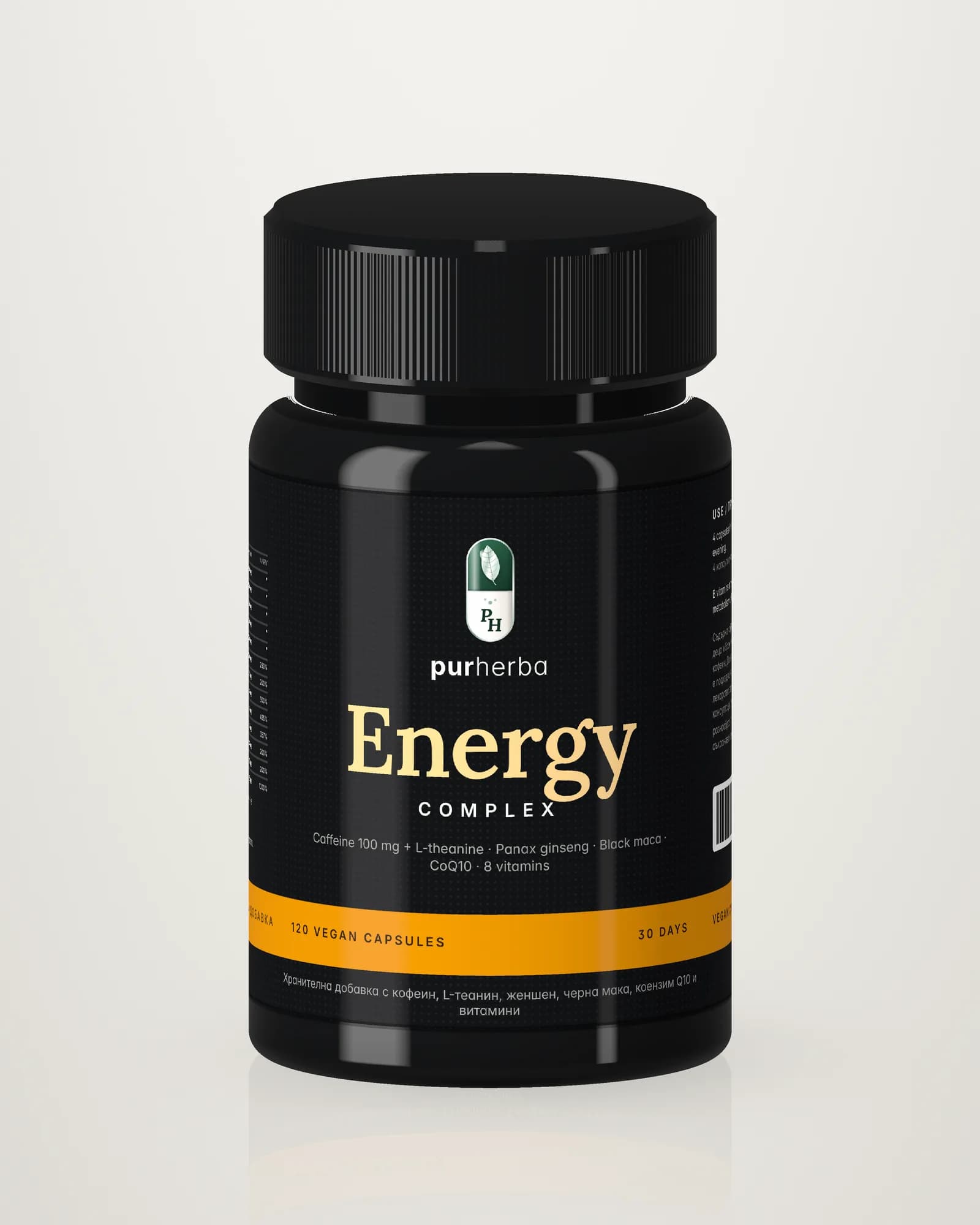
Found in:Metabolic ComplexEnergy Complex
How the origin is verified
Chemically the two kinds of caffeine are indistinguishable, but their atoms carry a "signature" of origin. Carbon has two stable isotopes, ¹²C and ¹³C, and plants accumulate them in a different ratio from petrochemical raw materials. For natural caffeine the δ¹³C value is between about −25 and −32‰, and for synthetic caffeine between −33 and −38‰ (Zhang et al., 2012).
The analysis takes minutes, and in the same study four drinks declared as "natural" turned out to contain synthetic caffeine. So the word "natural" on a label is only as reliable as the analysis behind it. The certificate for each of our batches is on the product page and behind the QR code on the pack.
How much caffeine is in a cup
Approximate amounts according to EFSA:
- espresso (60 ml): about 80 mg;
- filter coffee (200 ml): about 90 mg;
- instant coffee (200 ml): about 90 mg;
- black tea (250 ml): about 55 mg;
- energy drink (250 ml): about 80 mg;
- cola (355 ml): about 37 mg.
The actual amount depends on the variety, the preparation and the size of the cup.
Why the daily dose matters
Caffeine from a supplement adds up with that from coffee, tea and other drinks. EFSA's guidance for healthy adults is simple: up to 400 mg of caffeine a day from all sources, and up to 200 mg at one time, do not raise safety concerns.
With a clear dose on the label, the sum is easy. Metabolic Complex (150 mg) and two cups of filter coffee (180 mg) make 330 mg for the day. Energy Complex (100 mg) and two espressos (160 mg) make 260 mg. That is why a good supplement contains a moderate, clearly stated amount of caffeine.
Where caffeine comes from
In 1819 the young chemist Friedlieb Ferdinand Runge showed Goethe how an extract of belladonna dilates a cat's pupil. Impressed, the poet gave him a small box of Arabian mocha coffee beans and encouraged him to study them. A few months later Runge isolated the first pure caffeine: white crystals.
In nature, caffeine is found in coffee beans, tea leaves, cocoa, guarana and maté, plants that people have valued for centuries.
Caffeine in our products
- Metabolic Complex: 150 mg of natural caffeine from green coffee a day, split across two servings (75 mg each, with breakfast and with lunch), together with 150 mg of L-theanine.
- Energy Complex: 100 mg of natural caffeine from green coffee in the morning serving, together with 200 mg of L-theanine.
Both products have a caffeine-free variant. The EU-authorised health claims for the formulas come from the vitamins and minerals in them.
How to take it
- Metabolic Complex: 3 capsules with breakfast and 3 with lunch, not in the evening. Contains caffeine (150 mg per daily dose) and is not recommended for children or pregnant women. Contains 300 mg of EGCG a day: do not take on an empty stomach or on the same day as other green tea products. Not suitable for pregnant or breastfeeding women, or for people under 18.
- Energy Complex: 4 capsules with breakfast, not in the evening. Contains caffeine (100 mg per daily dose) and is not recommended for children or pregnant women.
- Add up the caffeine from the supplement and from the coffee and tea you drink during the day.
Sources
- 1.EFSA NDA Panel (2015). Scientific Opinion on the safety of caffeine. EFSA Journal 13(5):4102 — conclusions and Table 1 as summarised by EUFIC
- 2.EUFIC. EFSA opinion on the safety of caffeine
- 3.EUFIC. Caffeine levels in different foods and drinks (Table 1 from EFSA NDA Panel 2015)
- 4.Zhang L, Kujawinski DM, Federherr E, Schmidt TC, Jochmann MA (2012). Caffeine in your drink: natural or synthetic? Analytical Chemistry 84(6):2805–2810 (via ACS press release on phys.org)
- 5.University of Bristol, School of Chemistry. Discovery of caffeine (Runge 1819, Goethe's mocha beans)
- 6.Wikipedia: Friedlieb Ferdinand Runge (belladonna demonstration on a cat for Goethe; citing Runge 1820 and Anft 1955 J Chem Educ 32:566–574)
- 7.Clydesdale F. How is caffeine removed to produce decaffeinated coffee? Scientific American
- 8.Photo: “Green Coffee Beans (4075921494).jpg”, Michael Allen Smith, CC BY-SA 2.0, Wikimedia Commons