Ginseng (Panax ginseng): how to choose a quality root extract
How to recognise true Korean ginseng — the right species, root, standardised ginsenosides and a certificate of analysis — and the history behind the most famous root of the East.
October 11, 2026
Ginseng is perhaps the most famous root of East Asia — and a name under which quite different things are sold. Here is how to choose the real one, and why.
How to choose
- Panax ginseng. The label should carry the Latin name — not just “ginseng”.
- Root only. Look for “root” (radix), not “plant” or “leaf”.
- Standardised extract. A stated percentage of ginsenosides — at least 5%, measured by HPLC.
- The amount in milligrams. From the dose and the percentage you can work out how many mg of ginsenosides are in the daily dose.
- A certificate of analysis for every batch.
Why? Read on.
Why Panax ginseng specifically
Several plants are called “ginseng”. American ginseng (Panax quinquefolius) is a close relative from the same genus, but it grows in eastern North America — a different plant with a different origin.
“Siberian ginseng” is not a Panax at all. It is eleuthero (Eleutherococcus senticosus) — a shrub whose characteristic compounds are eleutherosides, not ginsenosides. The trade name “Siberian ginseng” appeared in the 1970s; botanists simply call it eleuthero.
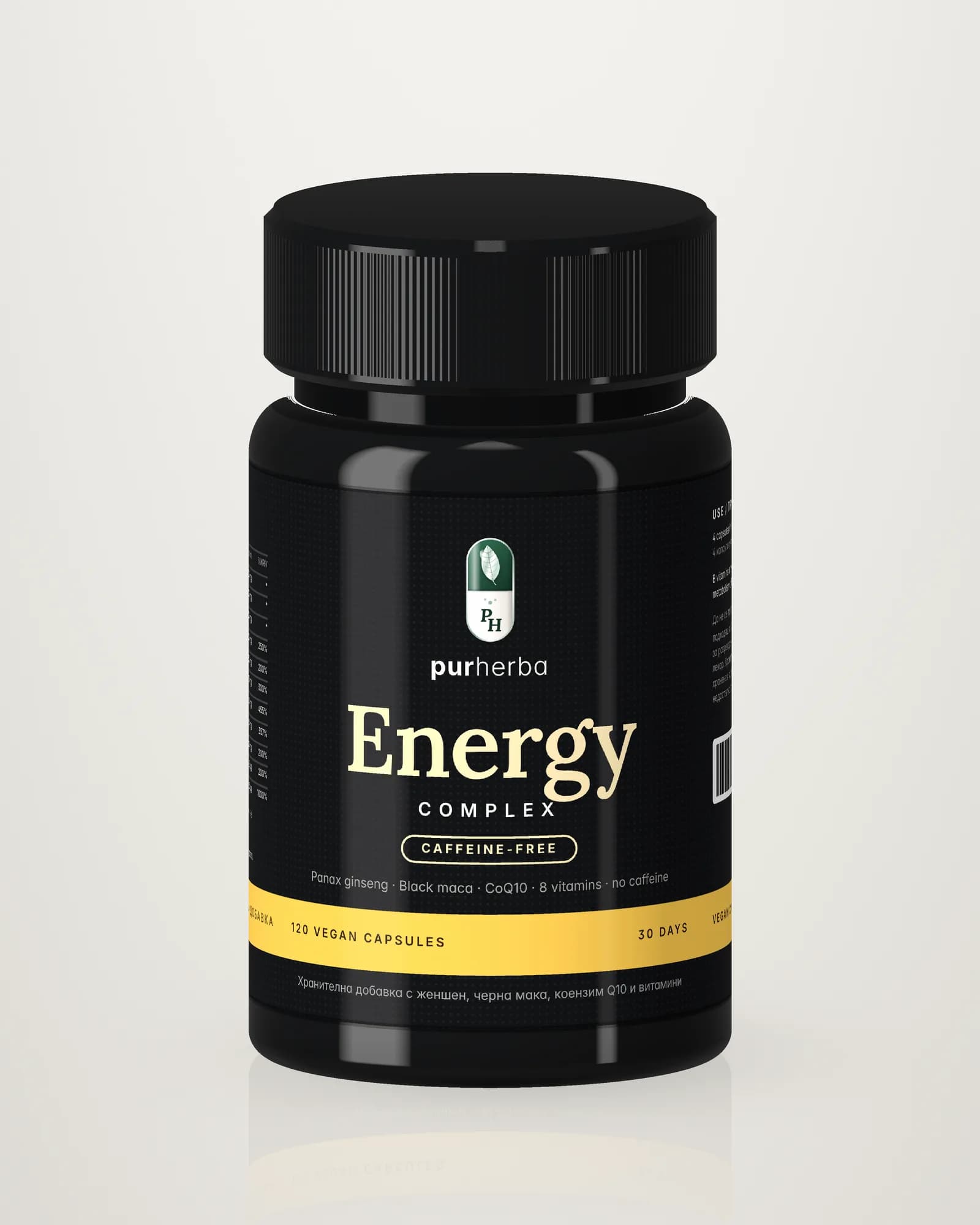
Found in:Energy ComplexEnergy Complex Caffeine-Free
Why root
The root is the part that East Asia has used for millennia and that the European Pharmacopoeia describes. Ginseng grows slowly, and the roots are usually dug up after five or six years; for Korean red ginseng, six-year-old roots are traditionally used.
What “5% ginsenosides” means
Ginsenosides are triterpene saponins characteristic of the genus Panax. About 50 of them have been found in the root, and about 100 in red ginseng. The most studied are Rb1, Rg1, Re and Rc. The Pharmacopoeia requires the dried root to contain at least 0.40% of Rg1 and Rb1 together.
The sum is simple: 400 mg of extract with 5% ginsenosides gives 20 mg of ginsenosides. This is how products with different doses and concentrations are compared — what matters is the final amount.
Why the certificate of analysis matters
Liquid chromatography (HPLC) not only measures the total percentage but also shows the profile of the individual ginsenosides. The ratios between them change with the age of the root and the season of harvest — which is how a laboratory can tell a six-year-old root from a two-year-old one.
The certificate of analysis for every batch — ginsenosides, heavy metals, pesticides and microbiology — is on the product page and behind the QR code on the packaging.
White and red ginseng
The washed and dried root is “white ginseng”. Red ginseng is made by treating the fresh root with steam — traditionally at 90–100 °C for 2–3 hours — and then drying it. The steam changes the chemistry: part of the Rb1 and Rb2 is converted into Rg3, and ginsenosides appear that are absent from the white root. There is also “black ginseng” — root that has been through nine cycles of steaming and drying.
The plant
Panax ginseng C.A. Meyer is a low perennial plant of the ivy family (Araliaceae), native to the mountain forests of the Korean Peninsula, north-eastern China and the Russian Far East. Wild ginseng is a protected species — almost all ginseng comes from plantations.
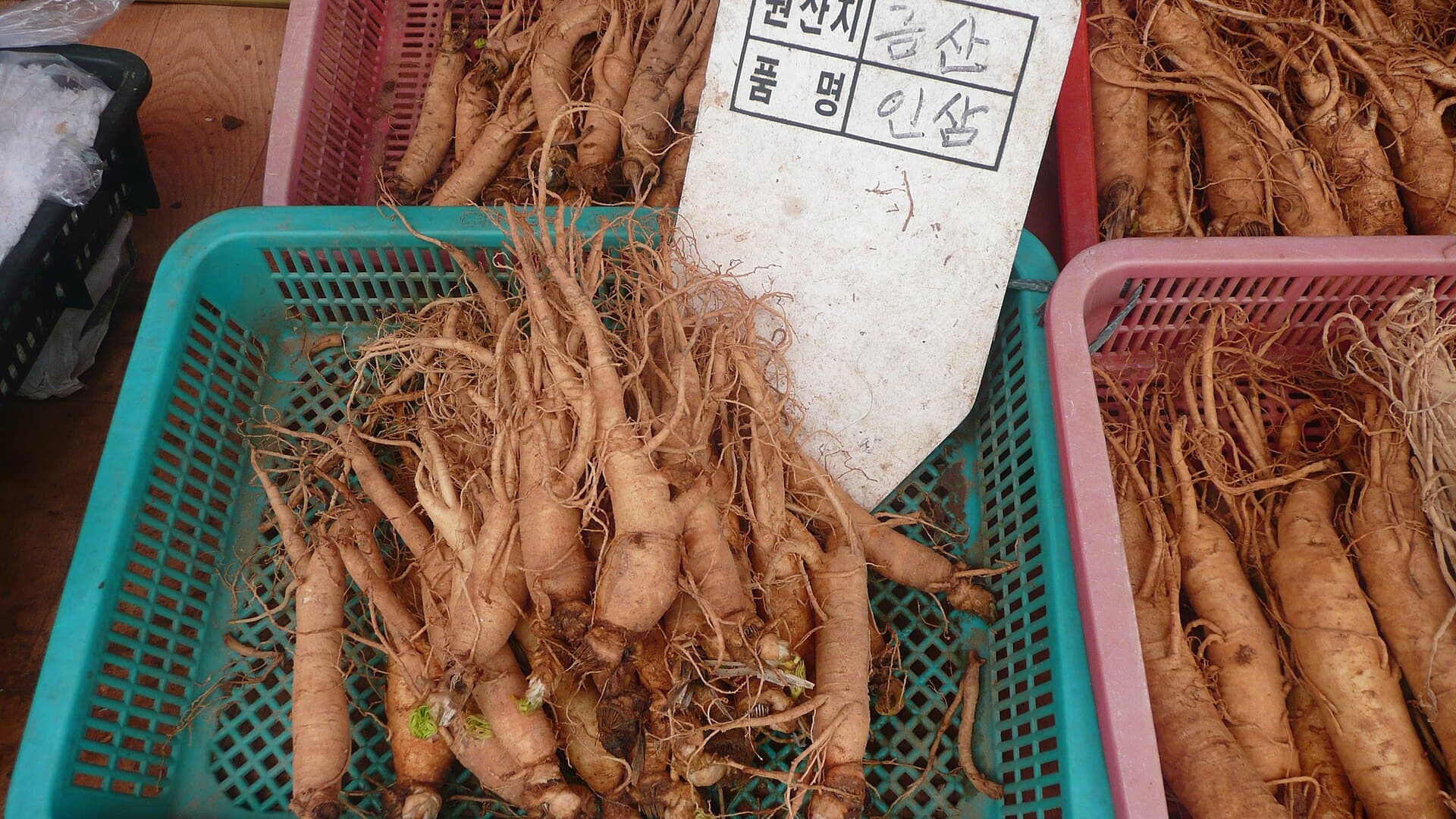
The Chinese name renshen means “man-root” — after the branched root that resembles a human figure. The Latin Panax comes from Greek and means “all-healing”, from the same root as “panacea”. Ginseng is described in the ancient Chinese treatise the Shennong Ben Cao Jing, and it reached Europe in 1610 — via the Netherlands.
Ginseng in Energy Complex
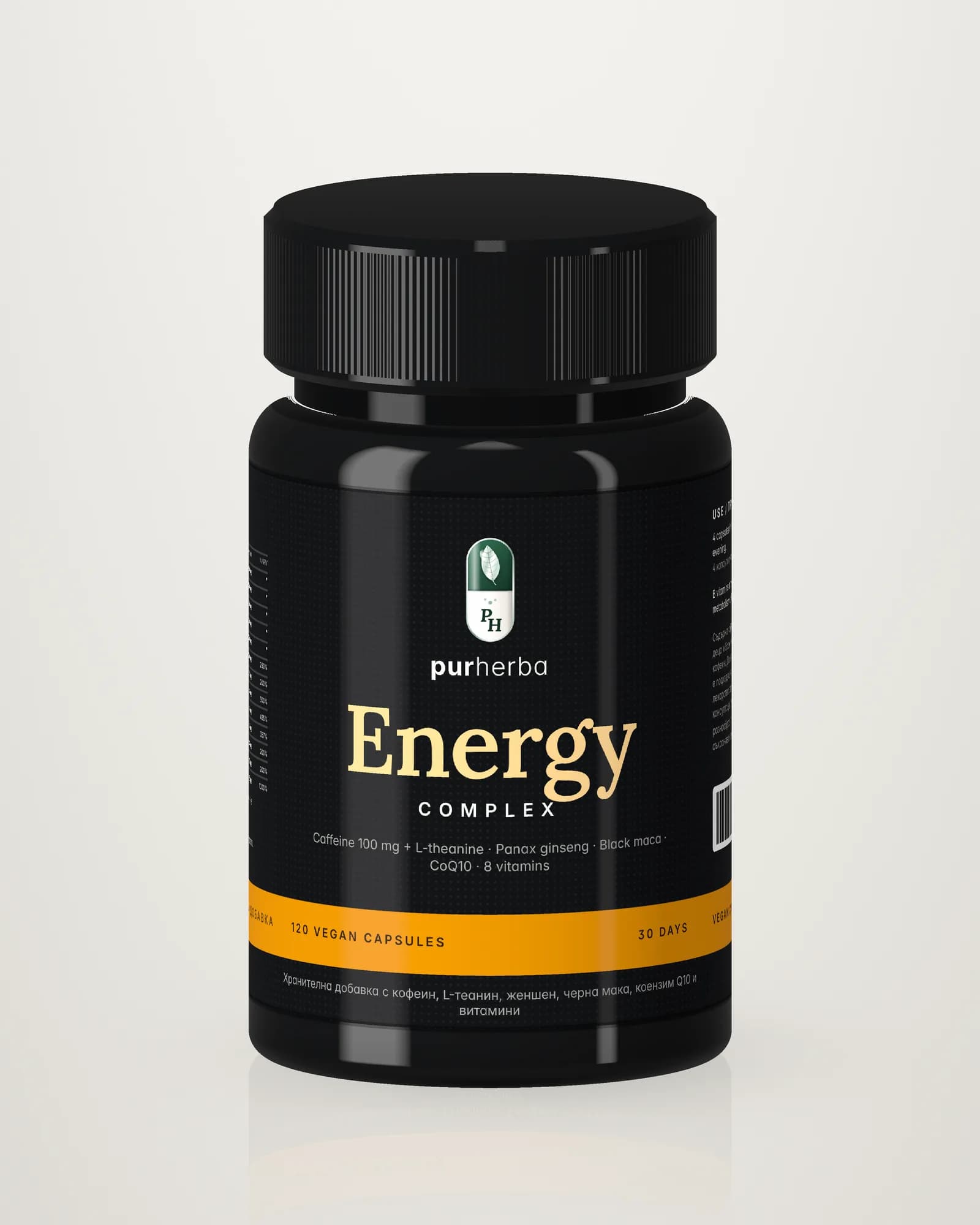
Energy Complex contains 400 mg of Panax ginseng root extract (≥5% ginsenosides) together with 500 mg of black maca, 100 mg of coenzyme Q10, 100 mg of natural caffeine from green coffee, 200 mg of L-theanine, 200 mg of vitamin C and B vitamins in active forms.
The claims authorised in the EU for the formula come from the vitamins: vitamin C, thiamin, riboflavin, niacin, pantothenic acid and vitamins B6 and B12 contribute to normal energy-yielding metabolism, while vitamin C, riboflavin, niacin, pantothenic acid, vitamins B6 and B12 and folate contribute to the reduction of tiredness and fatigue.
How to take it
4 capsules in the morning with breakfast, with water. Do not take in the evening. The daily dose contains 100 mg of caffeine; if you avoid caffeine, there is a caffeine-free and L-theanine-free version.
Sources
- 1.EMA/HMPC (2013). Assessment report on Panax ginseng C.A. Meyer, radix. EMA/HMPC/321232/2012
- 2.Ye X-W et al. (2023). Saponins of ginseng products: a review of their transformation in processing. Front Pharmacol 14:1177819
- 3.Liu Z et al. (2017). Dynamic changes in neutral and acidic ginsenosides with different cultivation ages and harvest seasons. Molecules 22(5):734
- 4.Lee SM et al. (2015). Characterization of Korean Red Ginseng (Panax ginseng Meyer): history, preparation method, and chemical composition. J Ginseng Res 39(4):384-391
- 5.EMA/HMPC (2014). Assessment report on Eleutherococcus senticosus (Rupr. et Maxim.) Maxim., radix. EMA/HMPC/680615/2013
- 6.NCCIH. Asian Ginseng (fact sheet)
- 7.Wikipedia: Panax ginseng; Panax (etymology, range, harvest age)
- 8.Photo: “Insam.jpg”, Brücke-Osteuropa, CC0, Wikimedia Commons