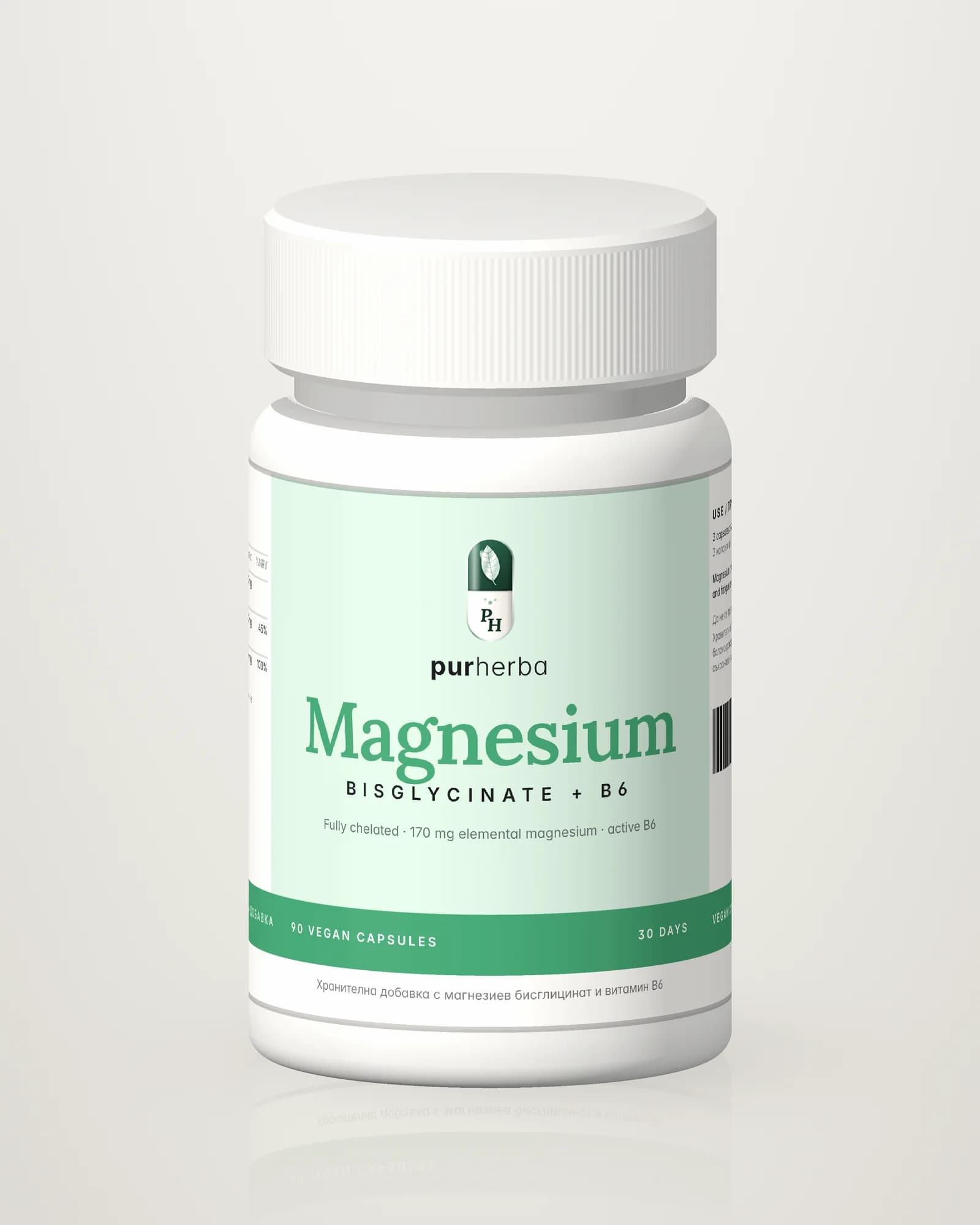
Magnesium bisglycinate: how to choose a magnesium supplement and why the form matters
How to compare magnesium products by elemental magnesium, why bisglycinate is gentle on the stomach, why the dose is split into two servings and what magnesium does according to the EU-authorised claims.
October 11, 2026

Magnesium is among the most sought-after supplements — and among the hardest to compare. One tub promises “1000 mg”, another “200 mg”, a third “bisglycinate 1430 mg”, and the amount of magnesium in them can be almost identical. Here is how to choose, and why.
How to choose
- Look at the elemental magnesium in the daily dose — the “of which magnesium” line, not the weight of the salt.
- Choose an organic form — bisglycinate, citrate, malate — rather than oxide.
- About 200 mg of magnesium from a supplement, split into two servings, is a sensible daily amount.
- If there is vitamin B6, look for the active form P-5-P and a dose of around 1.4 mg.
- Ask for a certificate of analysis for the batch.
Why? Read on.
Elemental magnesium: the number to compare
Magnesium is always bound to another molecule — oxygen, citric acid, glycine — and that molecule has weight too. That is why a label shows two numbers: the weight of the salt (or chelate) and how much of it is magnesium itself. The second is called elemental magnesium, and it alone tells you how much magnesium you are getting.
How much magnesium each form contains (calculated from molar mass):
- magnesium oxide — 60%
- magnesium citrate — 16%
- magnesium malate — about 15%
- magnesium bisglycinate — 14%
- magnesium chloride (hexahydrate) — 12%
- magnesium lactate (dihydrate) — about 10%
- magnesium sulphate (heptahydrate) — about 10%
- magnesium L-threonate — about 8%
So 200 mg of magnesium from bisglycinate is 1430 mg of chelate — four size 0 capsules. If a product promises “magnesium bisglycinate 1000 mg” in two capsules, it delivers about 140 mg of magnesium. The “of which magnesium” line tells the truth.
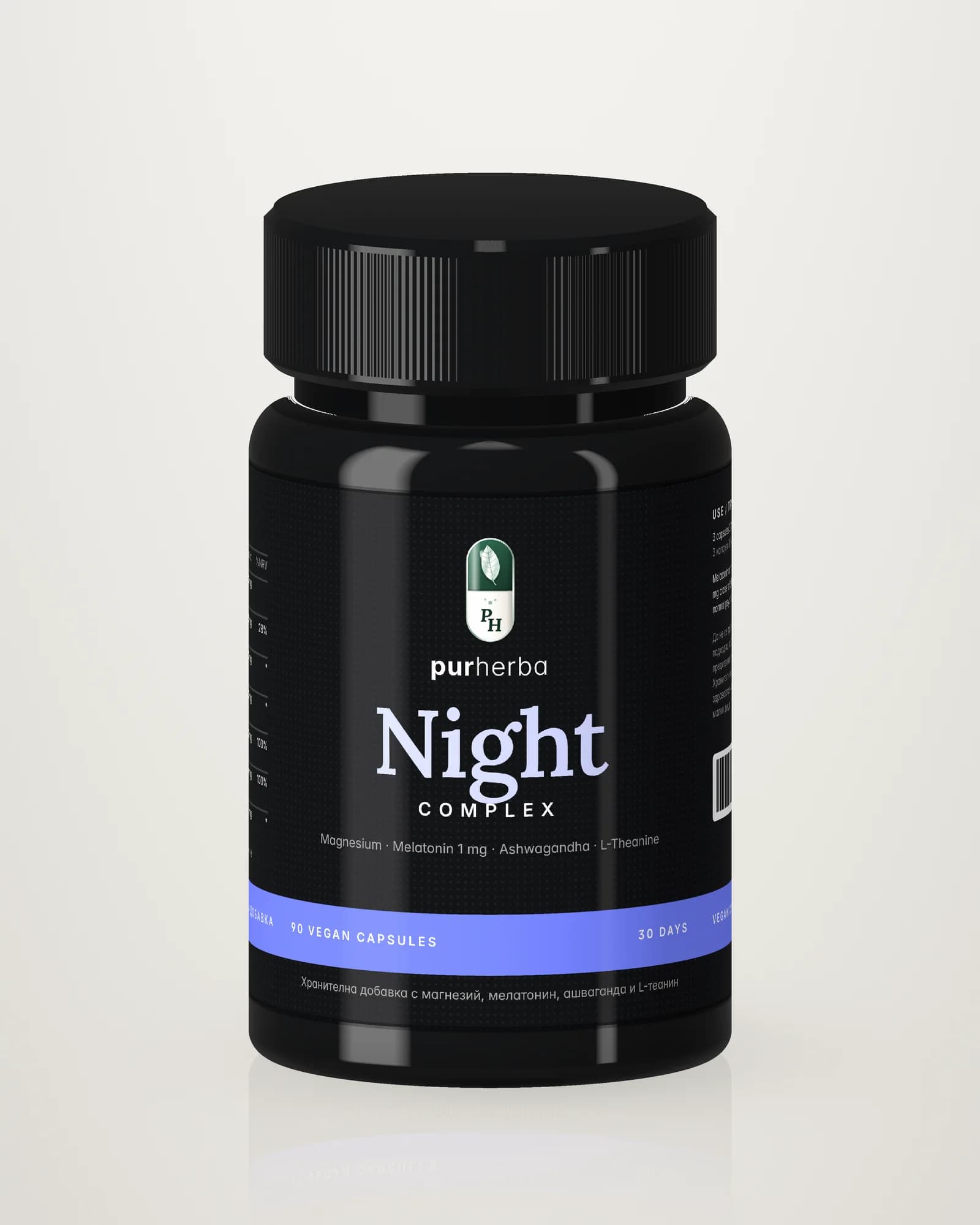
Found in:Magnesium Bisglycinate 200Night Complex
Why bisglycinate
Bisglycinate is a chelate: each magnesium atom is bound to two molecules of glycine, the smallest amino acid. The form is neutral in taste, soluble and gentle on the stomach.
- Organic forms — citrate, lactate, chloride, aspartate — are absorbed significantly better than oxide. With oxide, the absorbed fraction is only about 4% (Firoz and Graber, 2001).
- In a study using isotope-labelled magnesium, the chelate was absorbed on average 3.2 hours earlier than the oxide and did better in people with the most impaired absorption. It is also kinder to the gut: an average of 2.4 bowel movements in 24 hours versus 3.7 after oxide (Schuette et al., 1994).
Gentleness on the stomach is the practical advantage you actually notice: you can take magnesium every day without discomfort.
Found in:Magnesium Bisglycinate 200Night Complex
Why 200 mg in two servings
The EU Scientific Committee on Food recommends that magnesium from supplements should be up to 250 mg a day, and Germany's BfR advises splitting the dose into two or more servings. Magnesium taken in a large amount all at once is not fully absorbed.
That is why the formula is 200 mg of magnesium in four capsules: two with food and two before bedtime. This way the body receives magnesium in portions, and the rest comes from food — nuts, seeds, pulses, wholegrains, dark green leafy vegetables.
For reference: EFSA sets an adequate intake of 350 mg a day for men and 300 mg for women; the nutrient reference value (NRV) on labels is 375 mg. 200 mg from a supplement covers 53% of it.
Vitamin B6 in its active form
Vitamin B6 and magnesium often go together — both contribute to the reduction of tiredness and fatigue and to normal psychological function.
Here B6 is pyridoxal-5'-phosphate (P-5-P) — the active form in which the body uses it. The dose is 1.4 mg — 100% of the NRV, exactly the amount at which the authorised claims apply. EFSA recommends that B6 from supplements stay within moderate limits (up to 12 mg a day), so more is not better.
Found in:Magnesium Bisglycinate 200Night Complex
What magnesium does
According to the EU-authorised health claims (Regulation (EU) 432/2012), magnesium:
- contributes to the reduction of tiredness and fatigue;
- contributes to normal psychological function;
- contributes to normal functioning of the nervous system;
- contributes to normal muscle function;
- contributes to normal energy-yielding metabolism;
- contributes to electrolyte balance;
- contributes to normal protein synthesis;
- contributes to the maintenance of normal bones and teeth;
- has a role in the process of cell division.
How to take it
- 4 capsules a day with water: 2 with food and 2 before bedtime.
- If you also take another product containing magnesium, add the amounts together — up to 250 mg a day in total from supplements.
- If you take an antibiotic or a bone medicine, take it at least 2 hours before the magnesium — magnesium may reduce its absorption.
Sources
- 1.EFSA (2015). Dietary reference values for magnesium and phosphorus
- 2.BfR (2021). Proposed maximum levels for the addition of magnesium to foods including food supplements
- 3.Firoz M, Graber M (2001). Bioavailability of US commercial magnesium preparations. Magnesium Research 14(4):257–262
- 4.Schuette SA et al. (1994). Bioavailability of magnesium diglycinate vs magnesium oxide in patients with ileal resection. JPEN 18(5):430–435
- 5.NIH Office of Dietary Supplements. Magnesium — Fact Sheet for Health Professionals
- 6.EFSA NDA Panel (2023). Scientific opinion on the tolerable upper intake level for vitamin B6. EFSA Journal 21(5)
- 7.Regulation (EU) No 432/2012 — list of permitted health claims
- 8.Photo: Nigari — magnesium chloride from sea salt, Romain Behar, public domain, Wikimedia Commons