Melatonin: how to choose it and how to take it
Why 1 mg is the right dose, why melatonin should be taken shortly before bed, what "natural" melatonin means and how to recognise a quality product.
October 11, 2026

Melatonin is the hormone the body uses to "register" the arrival of night. As a supplement it is one of the simplest substances to choose, if you know what to look for. Here is how, and why.
How to choose
- Exactly 1 mg in the daily dose: the amount at which the EU-authorised claim on falling asleep applies.
- A clear instruction on timing: shortly before going to bed.
- High-purity melatonin, whether or not the label says "natural".
- Verified content: a certificate of analysis for every batch.
- A plant-based capsule, with no colourings or unnecessary additives.
Why? Read on.
Why exactly 1 mg
The authorised claim on falling asleep requires a food that contains 1 mg of melatonin per serving, taken shortly before going to bed. For comparison, the pineal gland produces between 0.1 and 0.9 mg of melatonin per 24 hours. 1 mg is a small, precise dose, and it is the one on which the claim is based.
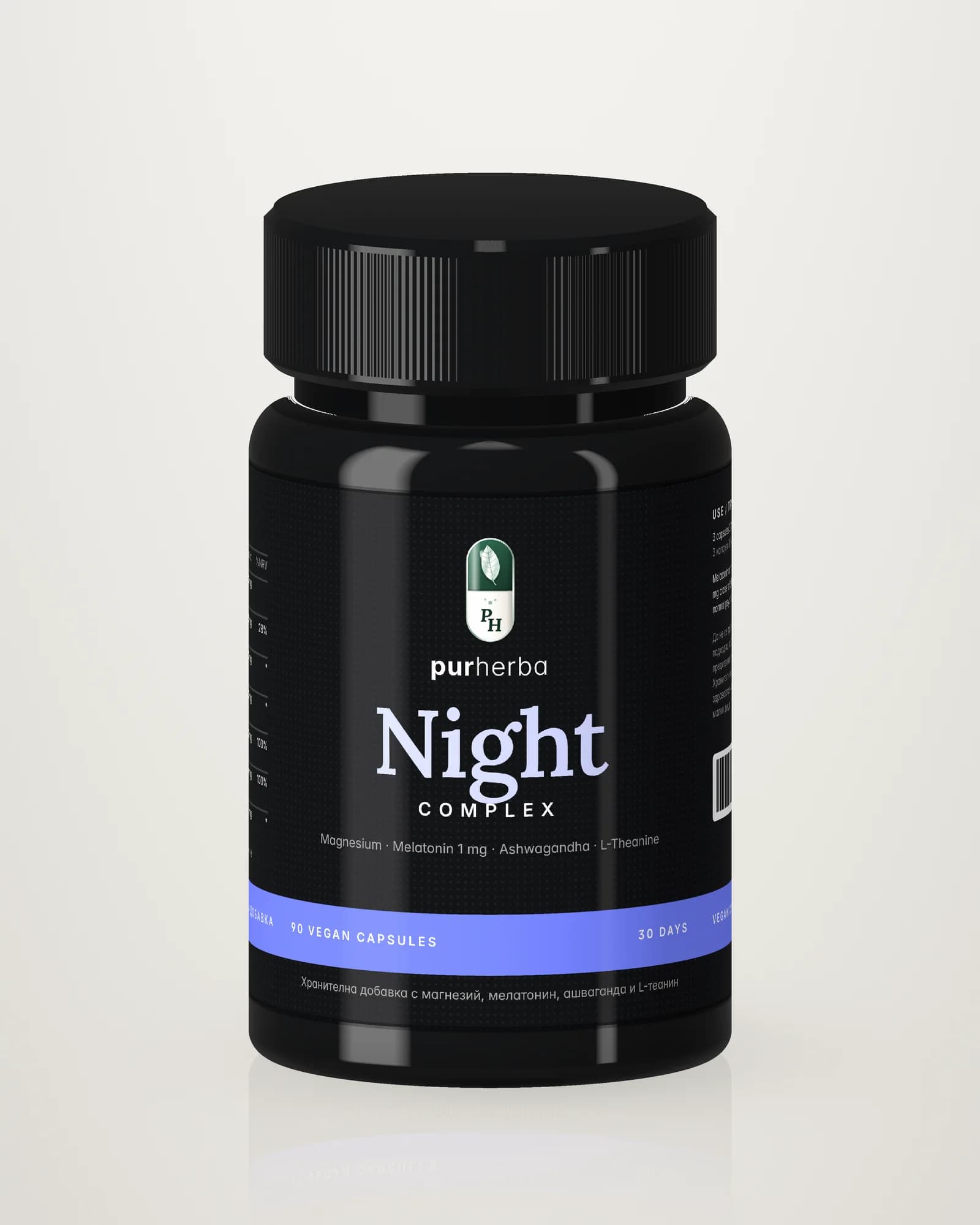
Found in:Night Complex
Why shortly before bed
In the body, melatonin is released in the dark and falls in the light. Melatonin taken by mouth is broken down quickly, with a half-life of between 20 and 60 minutes. That is why the timing matters: the dose is taken shortly before going to bed, not in the afternoon or the morning.
"Natural" or synthetic
Melatonin is the same molecule wherever it occurs, in humans, animals, plants and micro-organisms. In the earliest research it was extracted from the pineal glands and urine of animals; that method was abandoned as soon as melatonin began to be produced by chemical synthesis. Today synthesis supplies practically all the melatonin in supplements.
Plant melatonin (phytomelatonin) exists and is being studied, but for the quality of a product, purity and an exact dose matter more than the word "natural".
Why the certificate of analysis matters
With a dose of one milligram, accuracy is everything. A Canadian study of 31 melatonin products found that in over 70% of them the content differed from the declared amount by more than 10%. That is why a good manufacturer tests every batch, both the purity of the melatonin and the amount in each capsule. The certificate for each of our batches is on the product page and behind the QR code on the pack.
What melatonin does
According to the health claims authorised in the EU (Regulation (EU) No 432/2012):
- melatonin contributes to the reduction of the time taken to fall asleep. The beneficial effect is obtained with a daily intake of 1 mg of melatonin shortly before going to bed;
- melatonin contributes to the alleviation of subjective feelings of jet lag. The beneficial effect is obtained with an intake of at least 0.5 mg shortly before going to bed on the first day of travel and on the following few days after arrival at the destination.
The hormone of darkness
Melatonin was discovered in 1958 by the dermatologist Aaron Lerner of Yale University. His team processed more than 250,000 bovine pineal glands to isolate the substance that lightens the skin of frogs, hence the title of their paper: "Isolation of melatonin, the pineal gland factor that lightens melanocytes".
The body makes it from the amino acid tryptophan, by way of serotonin. The rhythm is set by the "internal clock" in the suprachiasmatic nucleus of the hypothalamus, and it is synchronised with light through the retina. Light suppresses the release of melatonin, most strongly blue light with a wavelength of 460–480 nm. That is why melatonin is called the "hormone of darkness". With age, its natural production gradually declines.
Melatonin in Night Complex
In Night Complex, the daily dose contains 1 mg of melatonin together with magnesium bisglycinate (105 mg of magnesium), 300 mg of ashwagandha root extract (5% withanolides), 200 mg of L-theanine, 10 mg of zinc and vitamin B6 in its active form (P-5-P).
In addition to the claims for melatonin, the formula carries the authorised claims for magnesium and vitamin B6: they contribute to the reduction of tiredness and fatigue and to normal psychological function.
How to take it
- 3 capsules 30–60 minutes before bed, with water.
- When travelling across time zones: shortly before going to bed on the first day of travel and on the following few days after arrival.
- Not suitable for pregnant or breastfeeding women, or for people under 18.
- May cause drowsiness: do not drive after taking it.
Sources
- 1.Регламент (ЕС) № 432/2012 на Комисията, консолидиран текст към 17.05.2021 — списък на разрешените здравни претенции
- 2.Lerner AB, Case JD, Takahashi Y, Lee TH, Mori W (1958). Isolation of melatonin, the pineal gland factor that lightens melanocytes. J Am Chem Soc 80(10):2587
- 3.Yale Medicine Magazine (October 1958). Discovery of the first pineal hormone (melatonin) by Dr. Aaron B. Lerner
- 4.Arendt J (2019). Melatonin: Countering Chaotic Time Cues. Front Endocrinol 10:391
- 5.Minich DM et al. (2022). Is Melatonin the 'Next Vitamin D'?: A Review of Emerging Science, Clinical Uses, Safety, and Dietary Supplements. Nutrients 14(19):3934
- 6.Arnao MB et al. (2023). Melatonin from Microorganisms, Algae, and Plants as Possible Alternatives to Synthetic Melatonin. Metabolites 13(1):72
- 7.Erland LAE, Saxena PK (2017). Melatonin natural health products and supplements: presence of serotonin and significant variability of melatonin content. J Clin Sleep Med 13(2):275–281 (summary via NutraIngredients)
- 8.Photo: “Waxing half moon over Brofjorden 1.jpg”, W.carter, CC0, Wikimedia Commons